The first Thunderbolt 5 switch
Turn a stack
of Macs into a supercomputer
Tempest pools the memory and compute of the Apple machines you already own into one local AI cluster, big enough to run frontier open models with no cloud and no per-token bill.

Frontier models, running on your own desk.
No cloud. No meter. No vendor holding the keys.
Pool Memory Like One Big Machine
Run models that never fit on a single box.
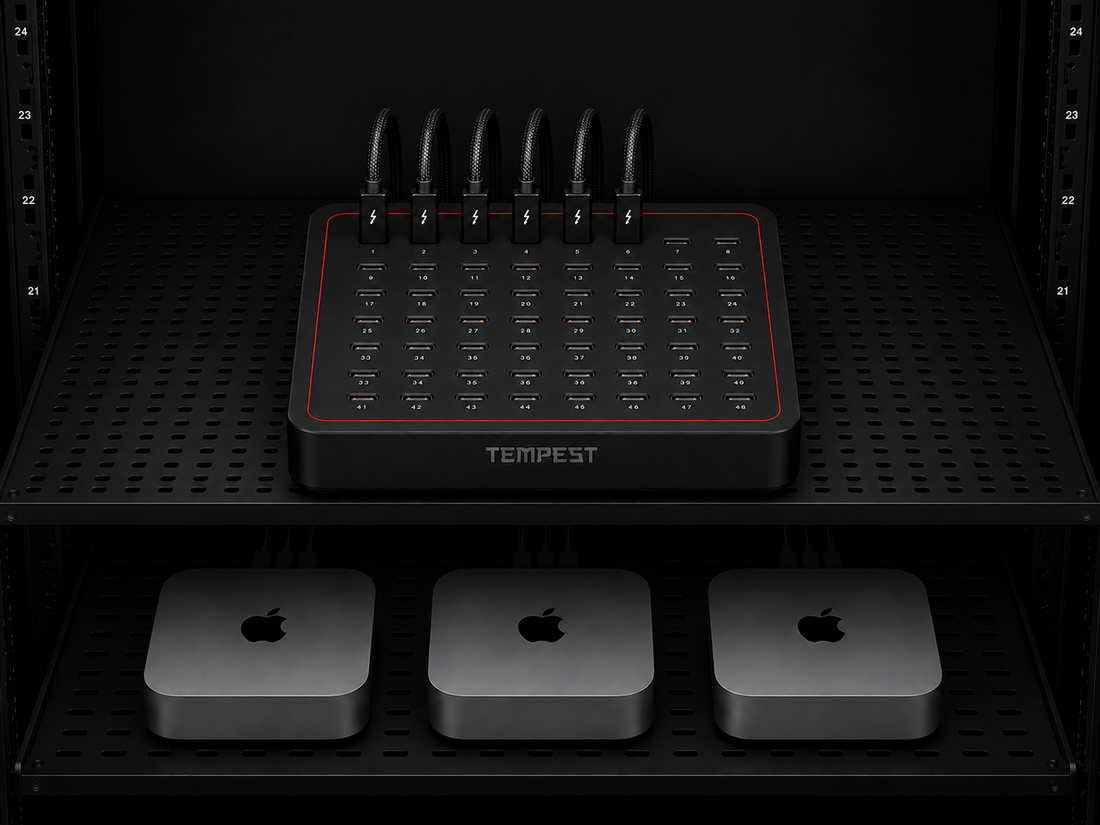
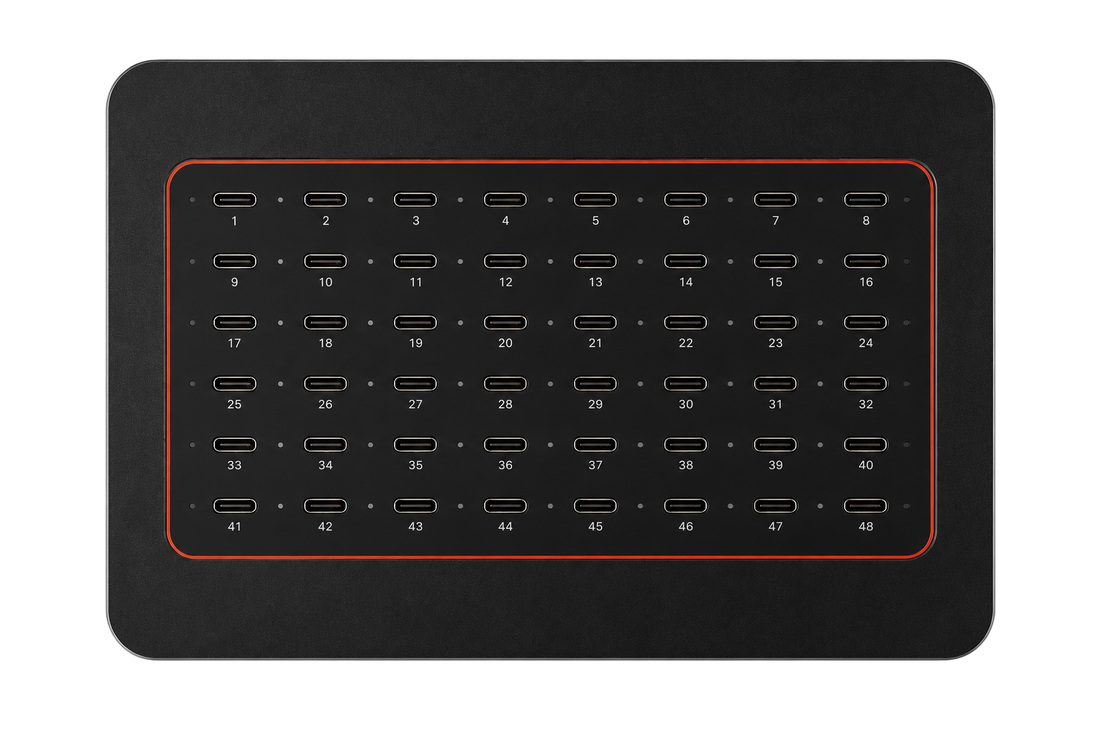
A single Mac is capped at its onboard memory. Tempest links many of them into one non-blocking fabric and pools their unified memory into a single shared space, so large open models like GLM 5.2, Kimi, Gemma, DeepSeek and Qwen load and run across the whole cluster instead of bouncing off one machine's ceiling.
- Frontier open models
- Hundreds of GB pooled
- Sub-10μs RDMA
Own the Compute, Skip the Meter
One purchase, no subscription.
Cloud APIs bill you per token for as long as you use them, and a dedicated enterprise AI box runs well into five figures. Tempest builds a large-memory cluster out of Macs you have already paid for, so once it is running your inference costs almost nothing to keep going. The hardware is the last bill you pay.
- No per-token fees
- Uses Macs you own
- A fraction of a DGX build
A Real Switch, Not a Daisy Chain
Machines talk at super high speed.
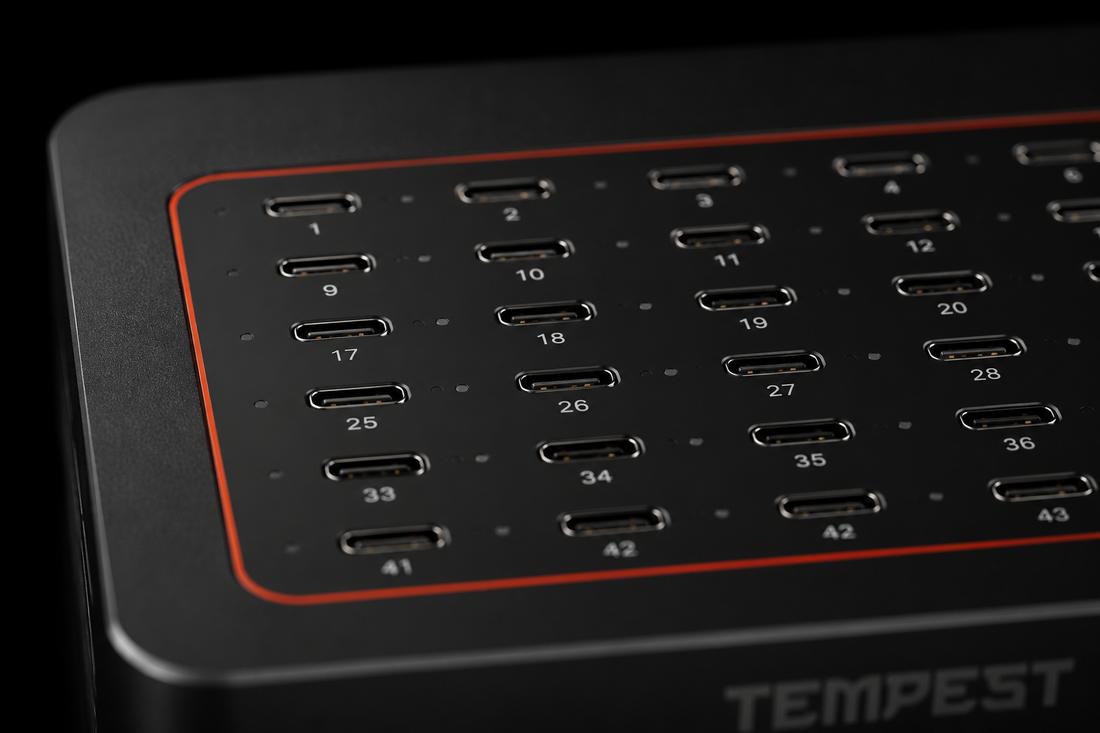
Thunderbolt bridging and software-only setups chain devices in a ring and choke once you get past a handful of them, with every node fighting for the same bandwidth. Tempest is a true non-blocking switched fabric: each device gets its own dedicated 80 Gbps link, so the cluster keeps scaling instead of collapsing under its own topology.
- Non-blocking fabric
- 80 Gbps per link
- Scales past the daisy chain
Open source and private by default
Thunderbolt bridging and software-only setups chain devices in a ring and choke once you get past a handful of them, with every node fighting for the same bandwidth. Tempest is a true non-blocking switched fabric: each device gets its own dedicated 80 Gbps link, so the cluster keeps scaling instead of collapsing under its own topology.
Your Control Plane
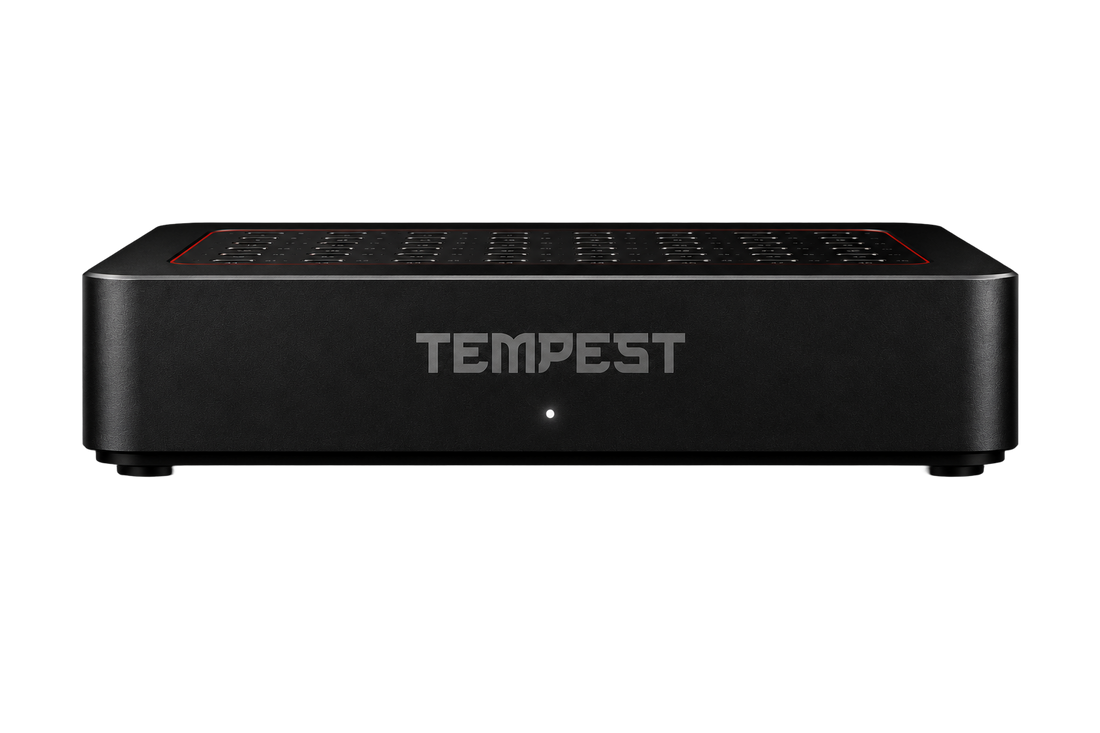
Tempest's software respects your stack. Define the cluster, distribute the model, and stay out of your own way. Only the essentials. Everything you need to run a cluster, nothing you don't.
Define Your Topology
Topology lives in software, not fixed silicon. Reprogram the FPGA bitstream as your cluster and the interconnect standards evolve.
Distribute Inference
Spread a single large model across every device in the cluster with RDMA coordination and zero-contention switching.
Benchmark Remotely
Not ready for hardware? Test and benchmark on Tempest through virtual access before you commit to a unit.
Why local AI stalls
- Per token cloud bills
- API rate limits
- Your data in someone else’s cloud
- Five figure enterprise boxes
- Models too big for one machine
- Daisy-chain bottlenecks
- Vendor lock-in
Switch to Tempest
Tempest works with devices you already own and takes them further: one pooled-memory cluster that stays in your building and answers to you.
- Pooled memory
- Frontier local models
- Flat one-time cost
- Private by default
- Open and auditable
- Non-blocking fabric
- Hardware you already own
How it stacks up
| Approach | Cost to run | Scale and memory | Your data | You own it? |
|---|---|---|---|---|
| Tempest | Free | Pool many Macs into one unified memory cluster | Stays local | Yes, open and repairable |
| Cloud APIs(OpenAI, Anthropic) | Per token, forever | Effectively unlimited, always metered. | Leaves your building | No |
| Dedicated AI box(Nvidia, DGX) | Five figures upfront | Large but fixed at purchase | Local | Sealed and fixed |
| Software clustering(Exo) | Free software | Limited by daisy-chain bottleneck | Local | Technical overhead |
Pricing
Top-end Hardware
Go all in on your own cluster.
$9,000
$15,000 MSRP
Virtual Access Pro
Frontier-class open models - without the hardware.
Spend your credits on
DeepSeek V4 Pro

$1.00 per 1M tokens
GLM 5.2

$0.80 per 1M tokens
Kimi K2.7 Code

$0.65 per 1M tokens
Ready to own your stack?

Sign up today and you lock in the lowest price across every Tempest tier on Kickstarter.
Sign up to be notified the moment the Kickstarter goes live.